
How to Create a Cryptocurrency in 2026: Cost, Technical Requirements, and Real Risks
Definition: Cryptocurrency vs Token
A cryptocurrency (Layer 1 coin) is a native digital asset that operates on its own independent blockchain infrastructure, meaning the underlying network, consensus mechanism, node architecture, and security model must all be designed, implemented, and maintained from scratch - examples include Bitcoin and Litecoin.
In contrast, a token is created on top of an existing blockchain, such as an ERC-20 token on Ethereum, leveraging the host network’s security, consensus, and infrastructure while focusing primarily on smart contract logic and token configuration. This structural difference significantly impacts development complexity, required engineering resources, security considerations, timeline, and overall cost, as building a standalone blockchain demands substantially more technical effort and long-term maintenance than deploying a token within an established ecosystem.
Two Ways to Create a Cryptocurrency
1. Launch a New Blockchain (Layer 1)
Launching a new Layer 1 blockchain requires designing a secure and scalable consensus mechanism that determines how transactions are validated and how network participants agree on the ledger state. Beyond consensus, the development process includes building a stable node architecture with transaction validation logic, networking protocols, block propagation, and synchronization mechanisms. Without a robust core infrastructure, the blockchain cannot function reliably in real-world conditions.
In addition to the protocol layer, a sustainable ecosystem requires secure wallet infrastructure, independent security audits, and long-term technical maintenance. Audits are essential to identify vulnerabilities before launch, while ongoing development ensures performance optimization, upgrades, and protection against emerging threats. A production-ready blockchain is not just code — it is continuously maintained infrastructure.
| Component | Estimated Cost |
|---|---|
| Core development (3–6 engineers, 6–12 months) | $150,000–$400,000 |
| Security audit | $20,000–$80,000 |
| Infrastructure & DevOps | $10,000–$50,000 |
| Listing & marketing | $30,000+ |
2. Create a Token (ERC-20, BEP-20, TRC-20)
Creating a token on an existing blockchain network, such as an ERC-20 token on Ethereum, a BEP-20 token on BNB Chain, or a TRC-20 token on TRON, is significantly simpler than launching a standalone Layer 1 cryptocurrency. In this model, you reuse the host chain’s consensus, security, and infrastructure and focus primarily on designing the smart contract, configuring token parameters (supply, decimals, transfer rules), and planning tokenomics and distribution. As a result, development timelines are shorter, costs are lower, and the technical entry barrier is much more accessible for startups and product teams compared to building an entirely new blockchain from scratch.
Requirements:
- Smart contract development
- Tokenomics design
- Deployment script
- Basic website
- Liquidity setup
| Component | Estimated Cost |
|---|---|
| Smart contract development | $3,000–$10,000 |
| Audit (recommended) | $5,000–$25,000 |
| Deployment & configuration | $1,000–$3,000 |
| Website & branding | $1,000–$5,000 |
Total realistic range: $5,000–$40,000

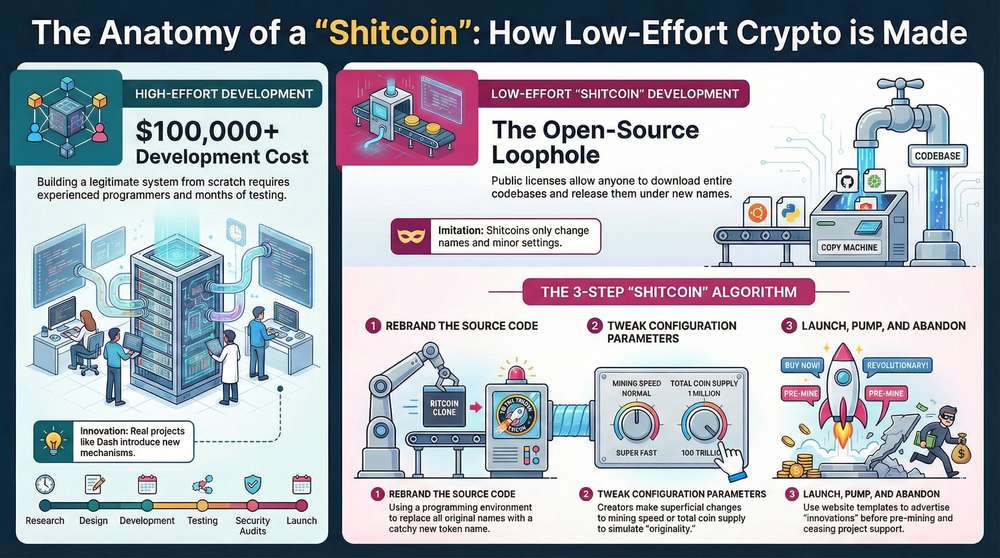
Why So Many Short-Lived Coins Appear
Because open-source blockchain code allows for quick cloning.
- Fork existing code (e.g., Bitcoin Core)
- Change name and configuration
- Pre-mine tokens
- List on minor exchanges
- Abandon development
Anti-Patterns in Cryptocurrency Development
One of the most common anti-patterns in cryptocurrency development is forking existing code without fully understanding the underlying consensus mechanics, which can introduce hidden vulnerabilities or unstable network behavior. Projects often ignore independent security audits, exposing smart contracts or protocol logic to critical exploits. Another frequent mistake is over-promising token utility without a realistic technical foundation or adoption strategy. In many cases, teams launch without a clear long-term roadmap or fail to allocate budget for infrastructure, maintenance, and ongoing development, which ultimately undermines sustainability and investor confidence.
Technical Requirements for Sustainable Crypto Projects
- Secure node infrastructure
- Formalized tokenomics
- Governance model
- Ongoing development team
- Community management
- Liquidity strategy
Timeline Comparison
| Type | Development Time |
|---|---|
| Simple ERC-20 token | 1–2 weeks |
| Token with audit & platform | 4–8 weeks |
| Custom Layer 1 blockchain | 6–12 months |
When You Should Consider Professional Blockchain Development
You should involve an experienced blockchain engineering team if you plan to raise external funding, since investors and VCs typically require secure architecture, documented tokenomics, and audit-ready smart contracts before committing capital. Professional expertise is also critical if you intend to pass independent security audits, pursue exchange listings, or ensure long-term scalability of your platform. Building infrastructure that can handle growing transaction volumes, protocol upgrades, and regulatory scrutiny requires structured development processes, production-grade security practices, and ongoing technical support - all of which go beyond basic token deployment.
Details for discussion
If you’re planning to launch a token or blockchain platform, ITProLab provides:
- Smart contract development
- Tokenomics consulting
- Blockchain architecture design
- Security-ready deployment